DailySurf is currently in beta. If you would like to try it, you can join the beta through the form on dailysurf.fr.
DailySurf began during a surfing trip to Bouznika, Morocco. I was there with Surf Progress, where I met Thibaut de Gueyer. Thibaut is a surf coach and the creator of Surf Progress, an online community built around clear, practical teaching for beginner and intermediate surfers. We got along quickly. We were both building things, and ideas came easily.
Five months later, back in Paris, I called him and asked: “What if we built a surfing app with AI in it?” His answer was immediate: let’s go.
By the following July, after many iterations, we opened the beta.
The question we are testing now is more precise than our original idea. Instead of asking surfers to inspect forecasts themselves, can DailySurf find the few sessions that fit their level, schedule, and starting point? We call this feature Le Guetteur, French for “the lookout.”

When could you actually surf?
It scans seven days of conditions and returns the few three-hour windows that fit your level and schedule.
Loading the July snapshot…

Biarritz – Côte des Basques
- Go
- Tue · 15:00–18:00
- Level
- Beginner
- Waves
- 1.0 m
- Period
- 7.5 s
- Wind
- 10 km/h
- Tide
- Rising
- Water
- 25.5 °C
Sanitized production snapshots captured 18–29 July 2026. The highlighted score, window and conditions come from the stored snapshot; the surrounding days are illustrative. The results are not live and contain no personal data.
We did not start there. The first beta had two simpler jobs: helping people explore places to surf and keeping a useful memory of their sessions.
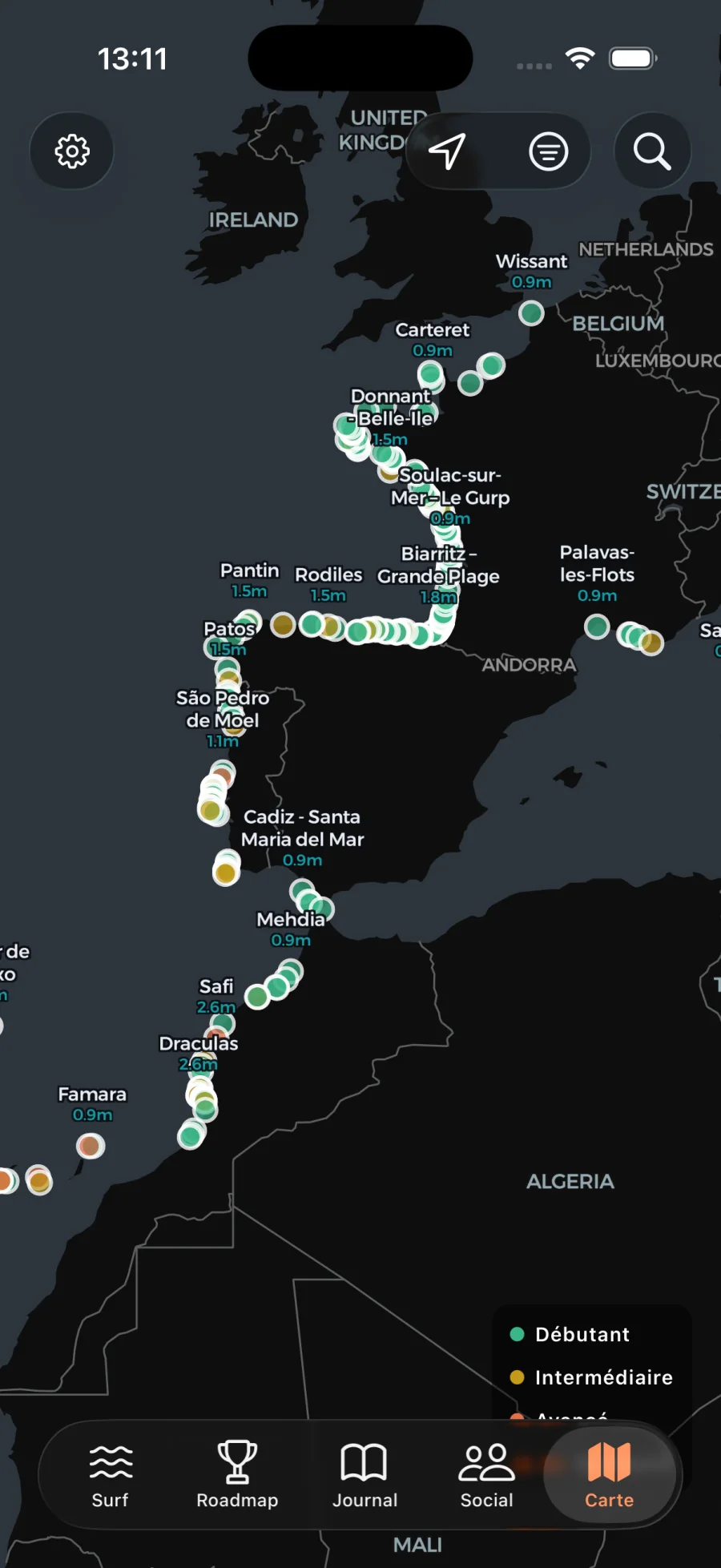
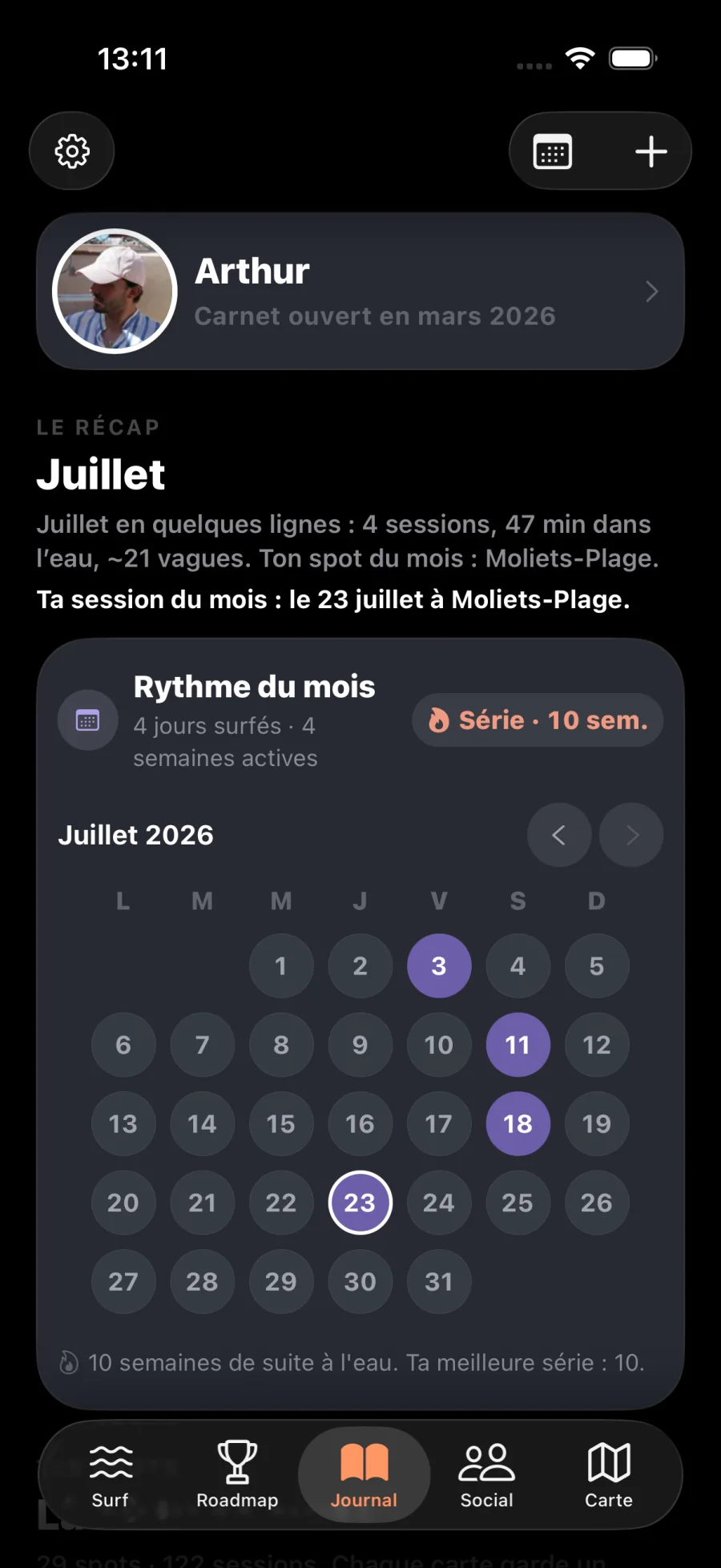
A surfer still had to compare spots, account for their level, check their calendar, estimate the drive, and find out whether equipment rental was available.
That is what led us to Le Guetteur. It scans several days of forecasts and builds three-hour daylight windows. It removes spots that do not fit the surfer or the practical constraints, then ranks what remains using swell, wind, tide, travel time, and level. Sometimes the useful answer is simply that there is no good window yet.
We are still testing this direction. We need to learn which signals matter, how personal the suggestions should be, and when an alert is helpful rather than noisy.
We started with a broad idea: a surfing app with AI. The beta gave us a more useful problem: helping someone notice the few sessions that genuinely fit their life and level. AI changed how quickly we could build. Finding that problem still came from talking to people and observing what happened.